

A Material Moment: The Case for Rethinking Construction
The global construction industry accounts for approximately 37% of global energy-related carbon dioxide emissions, according to the International Energy Agency. As developers, architects, and procurement teams face mounting pressure to decarbonise projects without compromising on performance or cost-efficiency, attention is increasingly turning to materials that can do more than reduce harm — materials that can actively reverse it. Engineered bamboo is emerging as one of the most credible answers to that challenge.
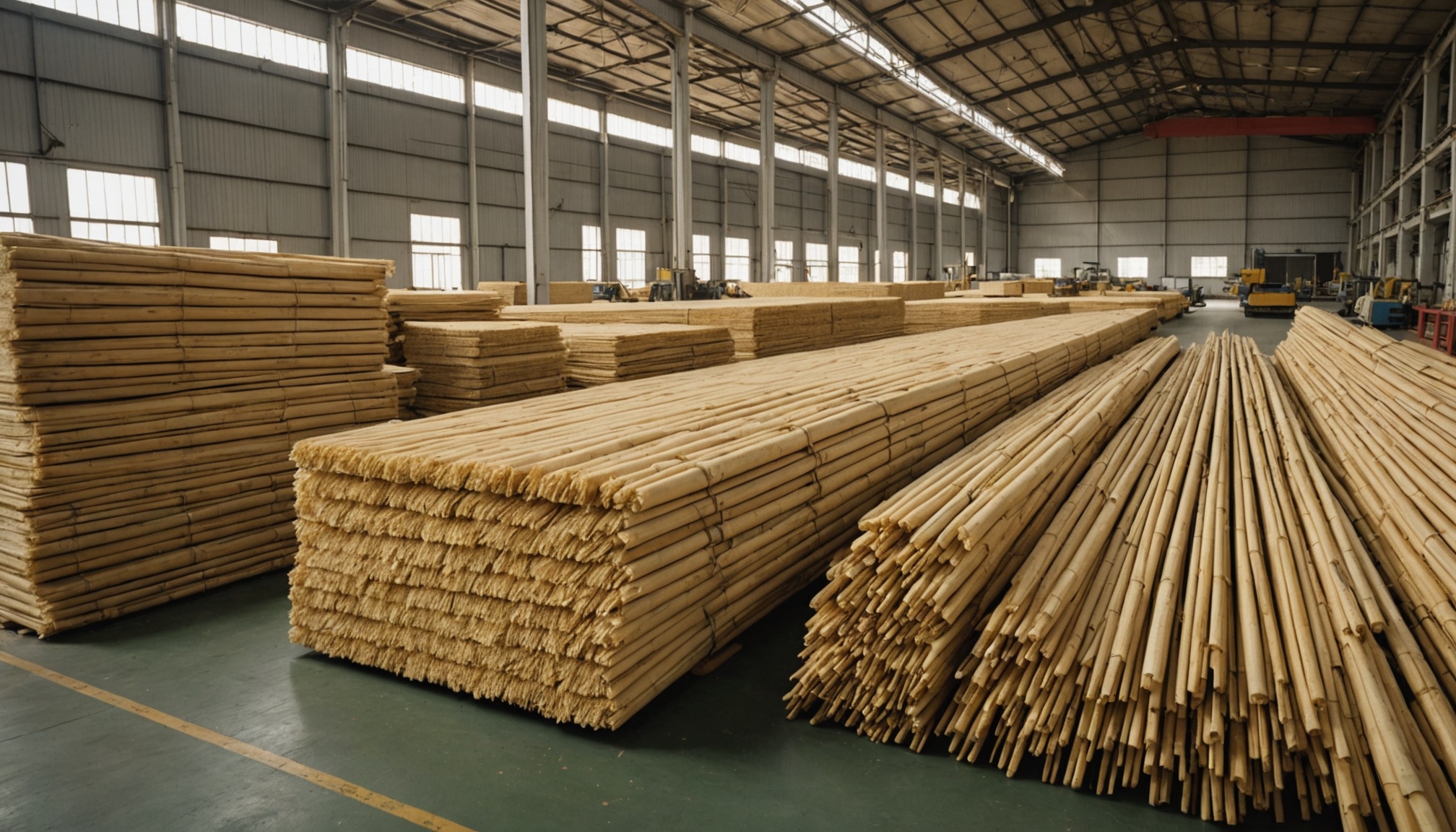
Unlike raw bamboo, which has historically been associated with informal construction in tropical regions, engineered bamboo is a precision-manufactured product. It is produced by processing bamboo culms — the hollow cylindrical stems — into fibres, strands, or strips that are then compressed under high pressure with adhesives to form boards, planks, and structural panels. The result is a dimensionally stable, high-performance material with properties that rival or exceed those of conventional timber and, in some applications, steel.
The Biology Behind the Performance
Bamboo is a grass, not a tree, and its biological characteristics are what give engineered bamboo its competitive edge. The species Dendrocalamus asper — one of the largest and most widely cultivated tropical bamboo species — can reach harvestable maturity in as little as three to five years, compared to decades for hardwood timber species. According to research published by the International Network for Bamboo and Rattan (INBAR), some bamboo species can sequester up to 17 tonnes of carbon dioxide per hectare per year during peak growth phases. This rapid growth cycle, combined with the plant's ability to regenerate from its root system without replanting, makes bamboo a genuinely renewable feedstock for industrial manufacturing.
Mechanically, Dendrocalamus asper exhibits tensile strength that can exceed 200 MPa in raw culm form, a property that the manufacturing process channels into the final engineered product. The resulting boards demonstrate hardness, flexural strength, and dimensional stability that make them suitable for high-traffic flooring, structural cladding, and interior fit-out applications where durability is non-negotiable.
Carbon Negativity: What It Means and Why It Matters
The term 'carbon-negative' is precise and demands scrutiny. A material qualifies as carbon-negative when the carbon sequestered during the growth of its raw feedstock exceeds the total carbon emitted across its full manufacturing lifecycle — extraction, processing, transport, and end-of-life disposal included. Engineered bamboo manufactured from responsibly managed plantations, such as those in Mindanao, Philippines, can meet this threshold when lifecycle assessment (LCA) methodologies are applied rigorously. The UN Food and Agriculture Organization (FAO) has documented bamboo's potential as a carbon sink in managed forest systems, and multiple peer-reviewed LCA studies support the carbon-negative classification for well-optimised engineered bamboo supply chains.
For developers pursuing green building certifications — including LEED, BREEAM, or the Philippines' own BERDE rating system — materials with verified carbon credentials contribute meaningfully to certification point thresholds. Specifying carbon-negative materials is no longer a marginal consideration; it is increasingly a contractual and regulatory expectation on institutional and public-sector projects across Southeast Asia and beyond.
Structural and Technical Performance in Practice
One of the most persistent misconceptions about bamboo in professional circles is that it occupies a niche decorative role — appropriate for feature walls and hospitality interiors but unsuitable for demanding structural or high-traffic applications. The evidence contradicts this. Engineered bamboo boards manufactured to commercial tolerances have demonstrated Janka hardness ratings that outperform many conventional hardwoods, including oak and teak, making them viable for commercial flooring under sustained foot traffic. Their low moisture expansion coefficients, when properly treated and sealed, support installation in climatic conditions typical across tropical and subtropical regions.
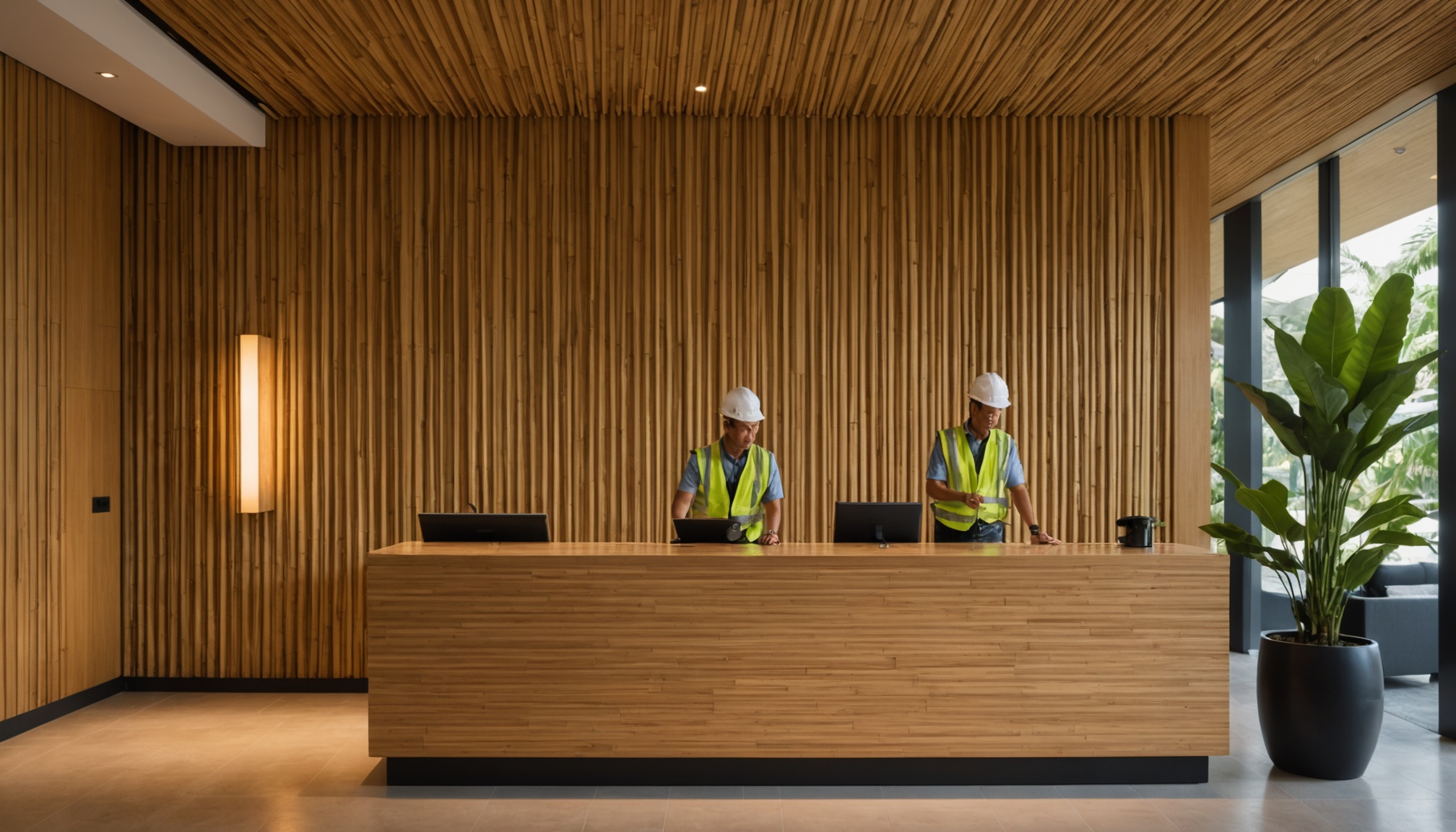
Engineered bamboo slat sheets and panels are also finding application in facade cladding, ceiling systems, and partition walling — contexts where the material's strength-to-weight ratio offers practical installation advantages over heavier alternatives. For contractors, lighter panel weights translate to reduced structural loading requirements and faster installation timelines, both of which have direct cost implications.
Design Versatility and Aesthetic Integration
Beyond structural credentials, engineered bamboo offers interior designers and architects a material language that is simultaneously contemporary and contextually grounded in Southeast Asian design heritage. The natural grain patterns and warm tonal range of processed Dendrocalamus asper — from pale straw to deeper amber depending on processing method — integrate with both minimalist and biophilic design vocabularies. Engineered bamboo boards can be specified as flooring planks, wall panelling, ceiling liners, or bespoke furniture substrates, giving design teams a consistent material palette across multiple elements of a single project.
The material also accepts standard woodworking machinery and joinery techniques, which means contractors do not require specialist tools or training to install it. This lowers the barrier to adoption on projects where the procurement team is evaluating bamboo for the first time alongside conventional timber alternatives.
Supply Chain Integrity and the Philippine Advantage
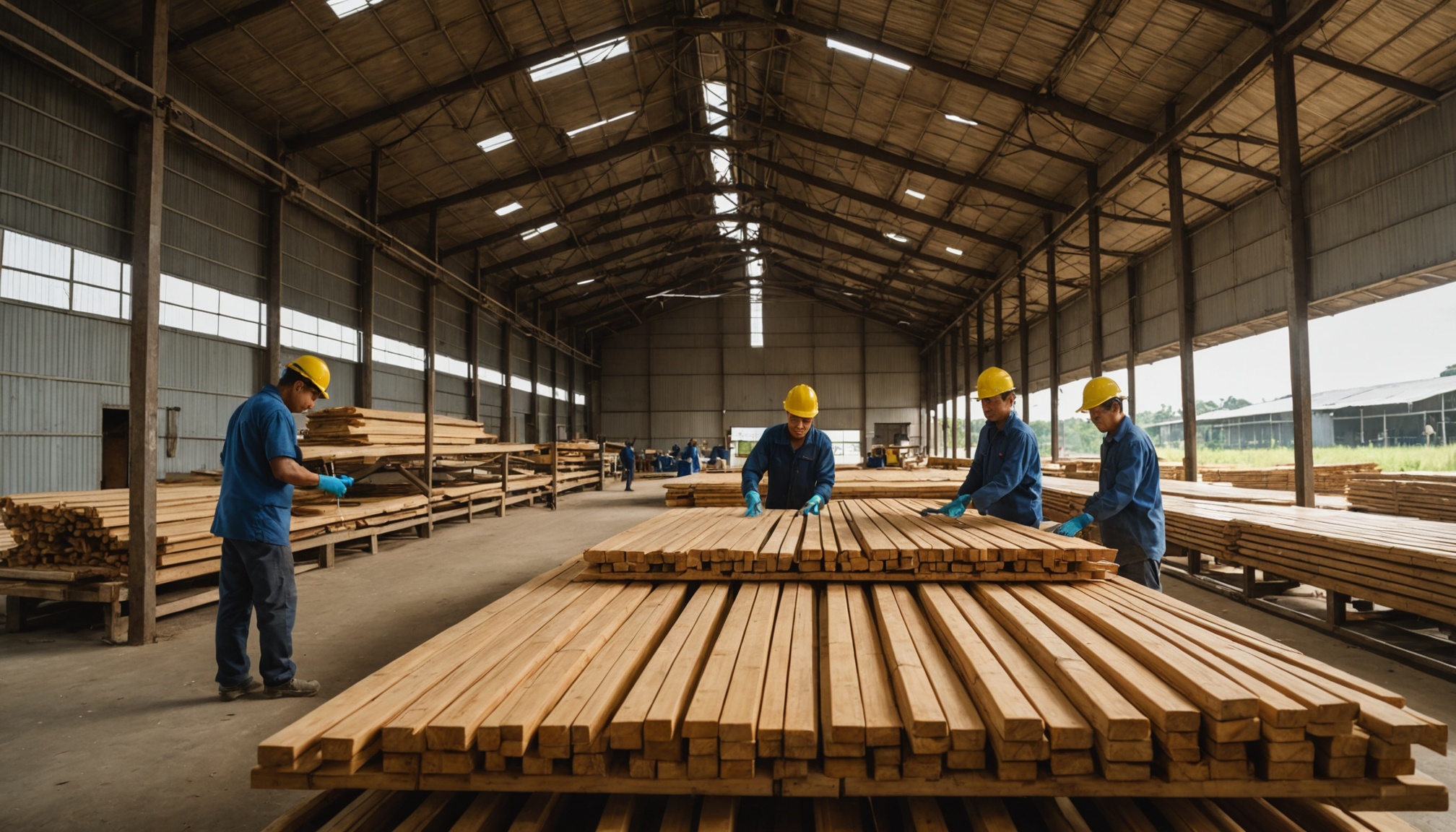
The credibility of any engineered bamboo product rests substantially on the integrity of its supply chain — from plantation management through to manufacturing process control. The Philippines is one of Southeast Asia's significant bamboo-producing nations, with Mindanao in particular offering favourable growing conditions for Dendrocalamus asper at scale. Manufacturing engineered bamboo domestically in the Philippines reduces the carbon footprint associated with long-haul import logistics for regional markets, and supports rural economic development in bamboo-growing communities — a social dimension that increasingly features in ESG reporting frameworks adopted by institutional developers.
For procurement teams evaluating supply chain risk, domestic Philippine manufacture also offers shorter lead times and greater supply visibility compared to importing finished bamboo products from more distant production centres. As the regional market for engineered bamboo matures, locally manufactured product with traceable sourcing will command increasing value in specifications that require documented environmental and social compliance.
Where Engineered Bamboo Sits in the Future of Construction
The construction industry is undergoing a material transition that is structural, not cosmetic. Regulatory frameworks, investor expectations, and occupant demand are collectively driving a shift toward low-carbon and regenerative building materials. Engineered bamboo is positioned at the intersection of several of these forces: it is rapidly renewable, structurally capable, aesthetically versatile, and — when responsibly manufactured — genuinely carbon-negative. INBAR has identified bamboo as a key component in meeting global reforestation, rural livelihood, and climate mitigation targets, and the material's industrial applications are central to that argument.
For architects, developers, contractors, and interior designers evaluating materials for the next generation of commercial, hospitality, and residential projects, engineered bamboo warrants serious technical consideration — not as an alternative to conventional materials, but as a primary specification choice in its own right. The revolution in sustainable construction is already underway. The question for built-environment professionals is no longer whether bamboo belongs in the conversation, but how quickly it will become standard practice.