
Why Manufacturing Process Matters for Bamboo Performance
Bamboo has been used as a raw construction material for thousands of years across Asia and Latin America. But raw bamboo culms — the hollow, segmented stalks of the plant — are highly variable in geometry, moisture content, and mechanical properties. They are also vulnerable to mold, insect infestation, and dimensional instability when exposed to humidity fluctuations. Engineered bamboo exists precisely to address these limitations. By breaking down the raw culm and reconstituting it under controlled conditions, manufacturers produce a dimensionally stable, structurally consistent panel product that behaves predictably in construction and interior applications. Understanding the manufacturing process is therefore not merely academic — it directly informs how a material will perform in service, how it should be specified, and what quality benchmarks to demand from a supplier.
Step 1: Selective Harvesting of Mature Culms
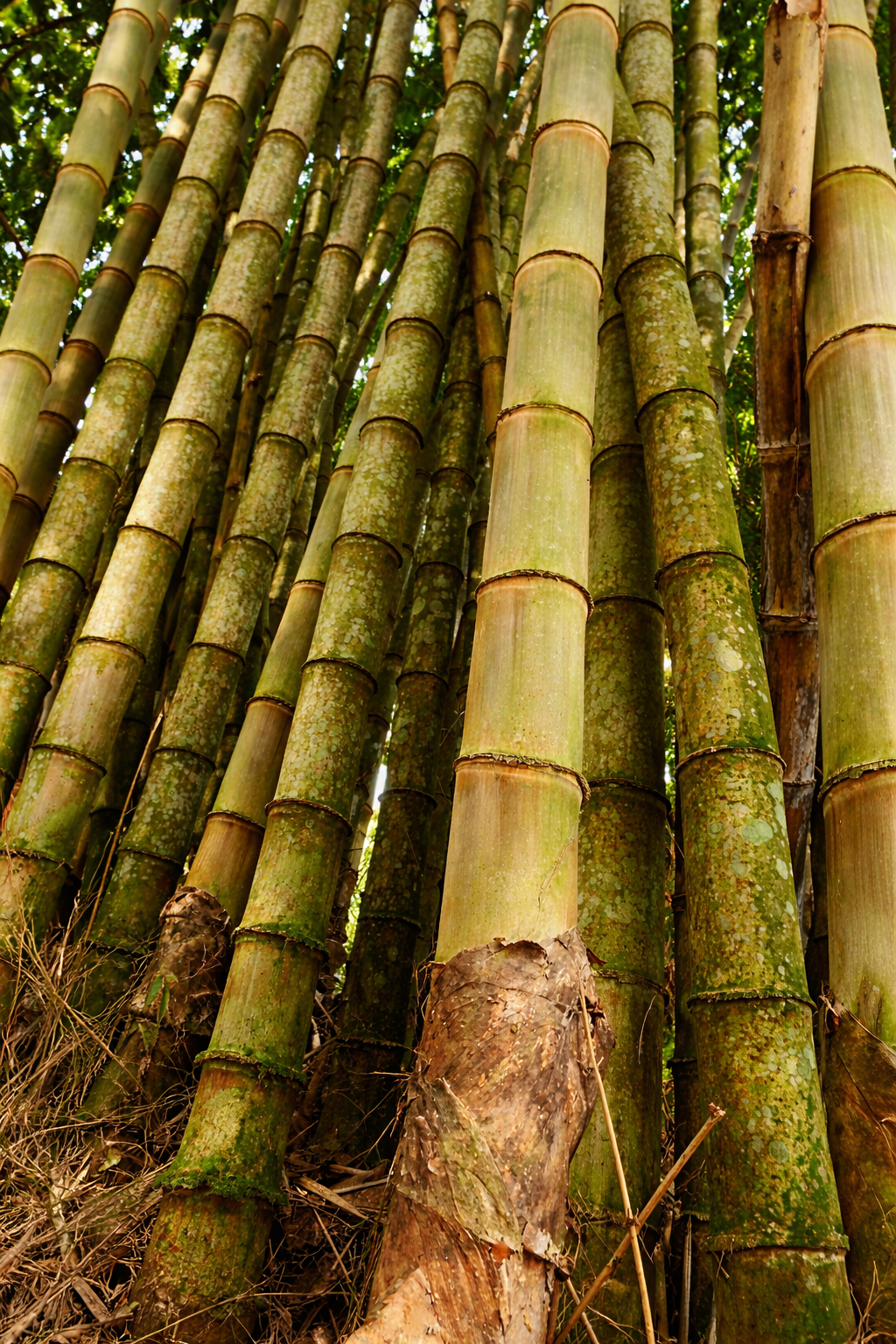
The process begins in the bamboo grove. For structural engineered products, culm maturity is critical. Research and industry practice consistently demonstrate that bamboo reaches peak fiber density and lignin content between three and five years of age. Harvesting before this window yields culms with lower tensile strength and higher moisture content, compromising the final panel's mechanical performance. Dendrocalamus asper — a large, fast-growing tropical species widely cultivated in Mindanao, Philippines — is particularly valued for its thick culm walls, high fiber volume fraction, and relatively low silica content, which facilitates downstream processing. Selective harvesting, where only mature culms are cut while younger shoots are left to mature, also preserves the rhizome system and enables continuous, multi-decade yields from the same clump without replanting.
Step 2: Cross-Cutting, Splitting, and Primary Processing
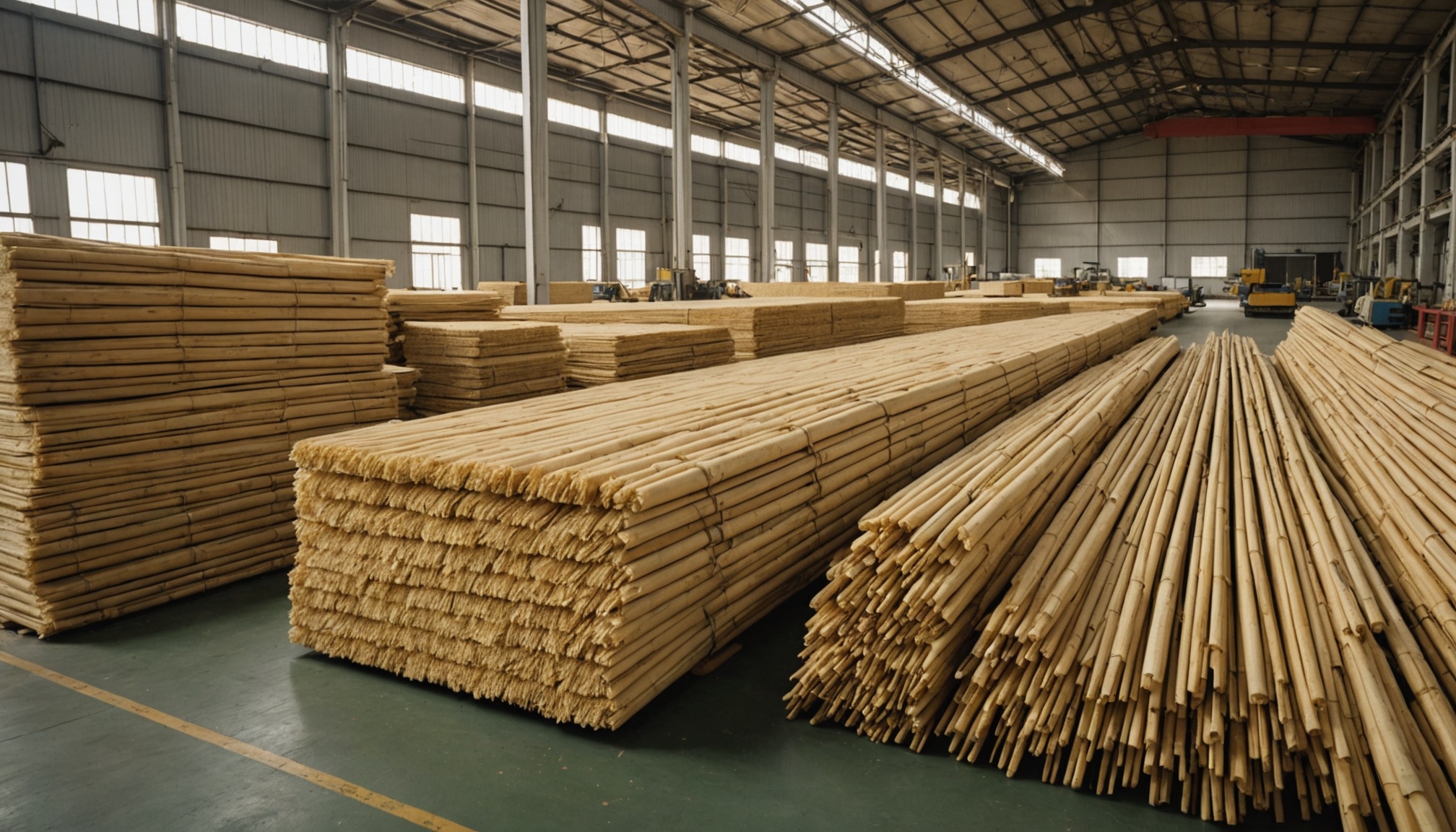
Once harvested, culms are transported to the processing facility and cross-cut into manageable lengths. The round culm sections are then split longitudinally and passed through profiling machines that remove the outer skin — which contains a waxy cuticle resistant to adhesive bonding — and the inner pith layer, which is low in structural fiber. What remains are strips of the culm wall, rich in dense vascular bundles. Depending on the target product type, these strips are processed further into either flat strips for strand board production or thinner slats for laminated bamboo panels. Consistent strip geometry at this stage is essential: width and thickness tolerances must be tightly controlled to ensure uniform glue line distribution and even pressing in later stages.
Step 3: Drying and Moisture Conditioning
Raw bamboo strips carry significant free moisture — often exceeding 80% moisture content on a wet basis when freshly processed. Before adhesive application or pressing, strips must be dried to a target equilibrium moisture content, typically in the range of 8% to 12%, depending on the intended end-use environment and the adhesive system employed. Industrial kilns are used to achieve consistent, controlled drying. Uneven or insufficiently dried material introduces differential stress during pressing, leading to internal delamination, warping, or bond failure in the finished board. Moisture conditioning is not simply a preparatory step — it is one of the most consequential quality control interventions in the entire production chain.
Step 4: Carbonization or Natural Treatment (Optional)
Prior to or following initial drying, strips may undergo carbonization — a thermal treatment process in which material is exposed to elevated temperatures in a controlled environment, typically using steam. Carbonization darkens the bamboo to a medium or deep brown tone by caramelizing the natural sugars in the material, and also helps reduce residual starch content that can attract insects. It is important to note that carbonization involves a trade-off: while it enhances aesthetic appeal and reduces biological susceptibility to some degree, studies have shown that the process can reduce the modulus of rupture and hardness of the final product relative to natural (uncarbonized) boards. Specifiers selecting between natural and carbonized products should factor in the structural demands of the application. For non-carbonized products, alternative preservation treatments may be applied at this stage to address biological durability.
Step 5: Adhesive Application and Assembly
Dried and treated strips are coated with adhesive and assembled into mat or layered configurations prior to pressing. The choice of adhesive significantly affects both the performance and environmental profile of the finished board. Urea-formaldehyde (UF) resins are historically common in wood-based panel manufacturing due to their low cost and fast cure times, but they release formaldehyde over time, raising indoor air quality concerns. Higher-specification engineered bamboo products increasingly use phenol-formaldehyde (PF) or isocyanate-based adhesives such as MDI (methylene diphenyl diisocyanate), which offer superior moisture resistance and lower or negligible formaldehyde emissions. For strand-woven bamboo boards — one of the densest and hardest engineered bamboo formats — the strips are separated into loose fiber strands, blended thoroughly with resin, and formed into a mat with randomly oriented or aligned strands before pressing.
Step 6: Hot Pressing and Panel Formation
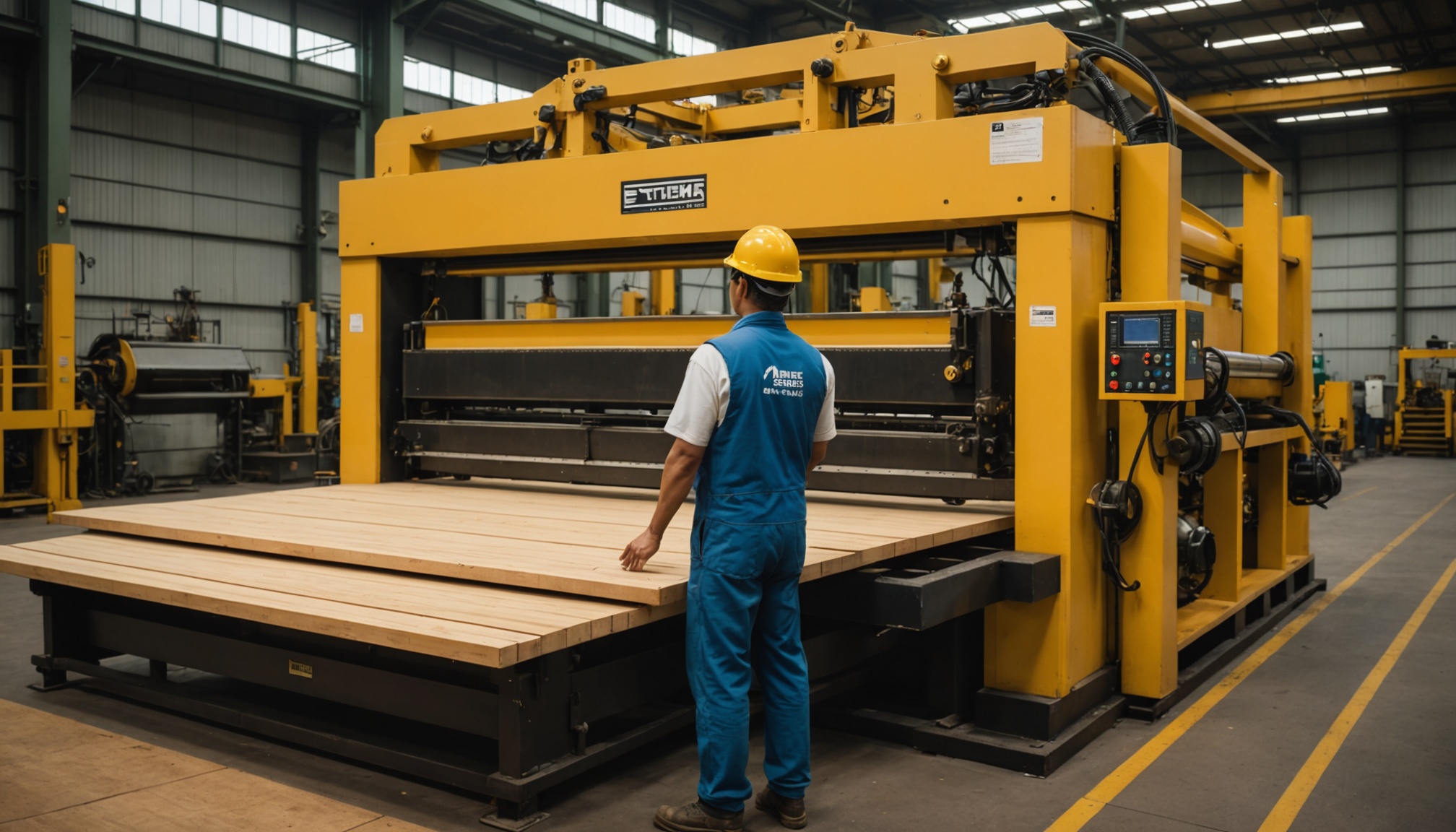
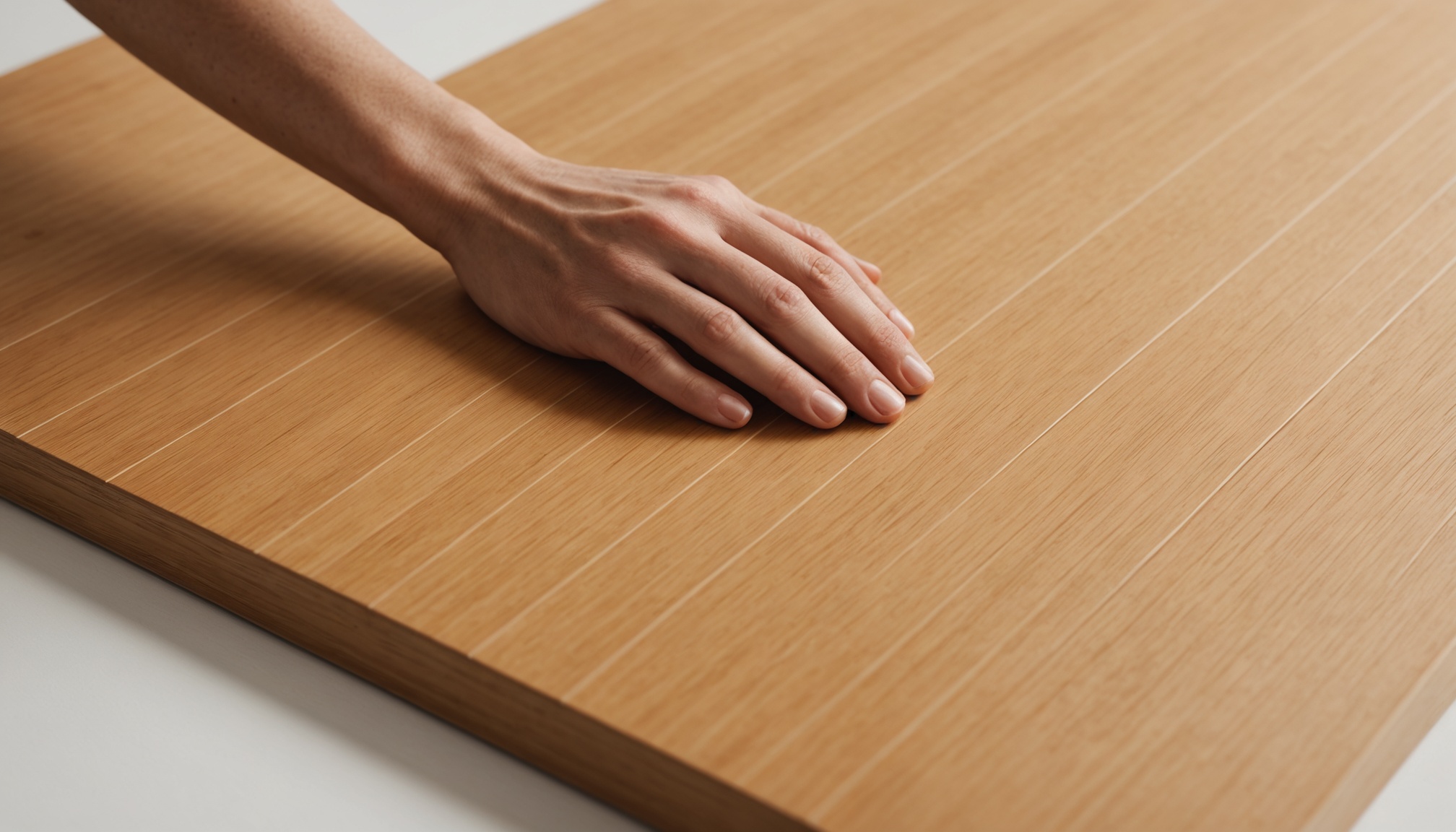
The assembled mat or laminate is loaded into a hydraulic hot press, where simultaneous application of heat and pressure consolidates the assembly into a rigid panel. Pressing parameters — temperature, pressure, and press time — are carefully calibrated to the adhesive system, strip geometry, and target board density. Strand-woven bamboo, pressed at high densities, can achieve apparent densities exceeding 1,000 kg/m³, which is substantially higher than most hardwoods and conventional wood composites. After pressing, boards are removed, stacked, and conditioned to allow internal stresses to equilibrate before further processing. Boards are then sawn to dimension, sanded to a specified surface finish, and subjected to quality inspection. Final boards may also receive factory-applied surface treatments, coatings, or edge profiles depending on the product specification.
Quality Standards and What Buyers Should Verify
Engineered bamboo is not yet governed by a single universal international standard equivalent to those applied to structural timber, but several benchmarks are relevant. ISO 22157 provides test methods for bamboo culm mechanical properties, while product-level standards such as ISO 19624 address laminated bamboo products. Buyers specifying engineered bamboo for construction or interior applications should request third-party test data for modulus of rupture, modulus of elasticity, internal bond strength, formaldehyde emission class, and moisture resistance. For projects with sustainability certification objectives — such as LEED, BREEAM, or EDGE — the carbon sequestration profile of the source bamboo and the manufacturing energy footprint may also be relevant inputs. A well-documented supply chain, from verified bamboo plantation to finished panel, provides the traceability that increasingly stringent procurement standards require. Understanding how a board is made is ultimately the foundation for knowing whether it will perform as specified.